
Your cart is empty.
Browse products


Blog
Australian Fire Door Signage Regulations
The importance in understanding and complying with the Signage Regulations within Australia is paramount no matter what industry you are in. Firstly, in order to comply with the signage regulations within Australia you need to ensure you have a fire door that meets the individual requirements related to the establishment it is located. Once you’ve […]
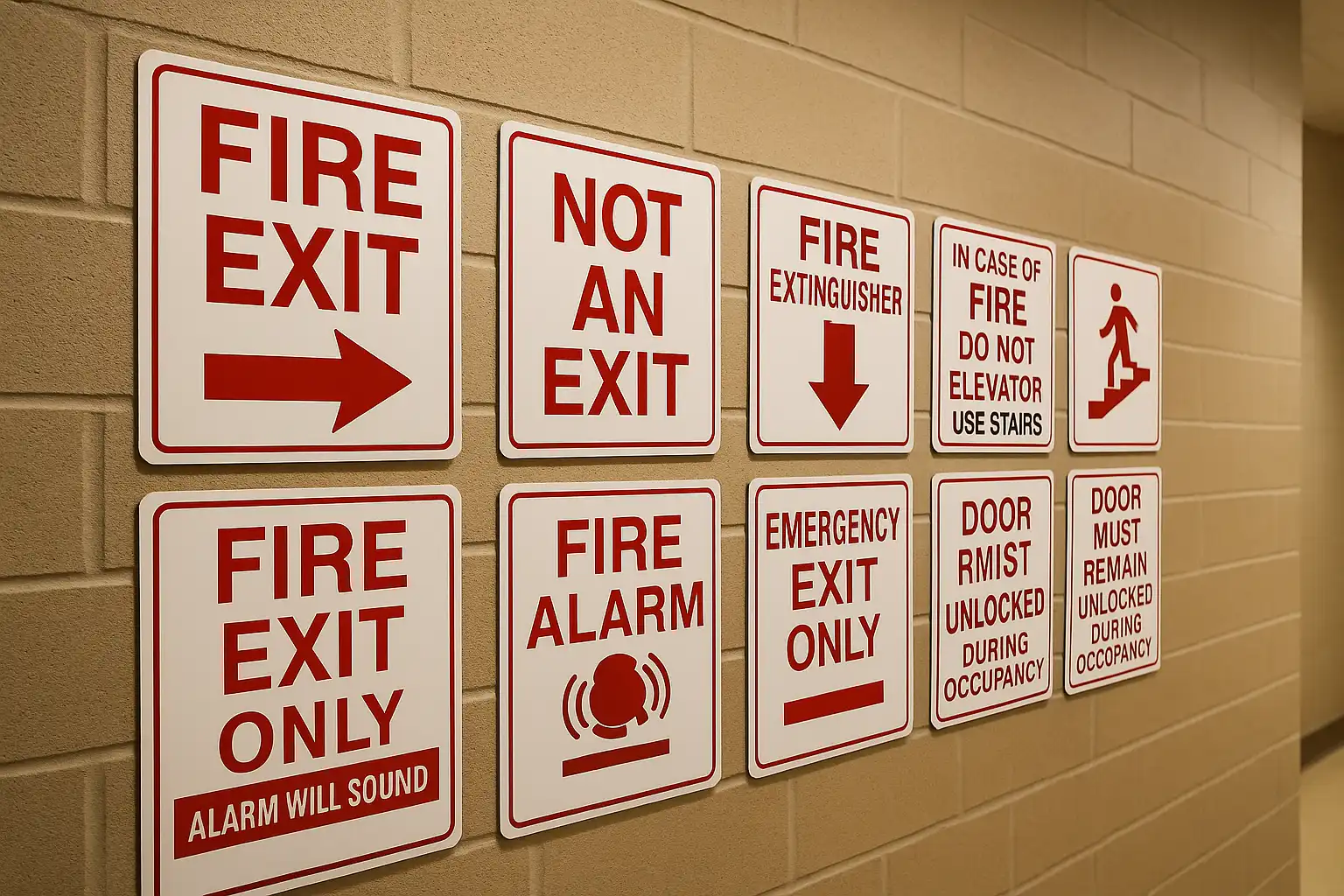
Maintaining a compliant environment across Australia is paramount no matter what industry you are in. When it comes to fire safety, the hardware itself is just the beginning. Firstly, in order to comply with the signage regulations within Australia you need to ensure you have a fire door that meets the individual requirements related to the establishment it is located.
Once you’ve got that ticked off, you can then check to make sure you’ve met the legislative requirements for your Fire Door Signage. A very important set of standards that will help keep you and your peers safe.
Key points in this article
Before diving into the specific codes and phrasing, here is a quick overview of what you need to look out for. Here’s a checklist to help you out:
-
Check your states legislative requirements for Fire Door Signage – as they differ depending on your location.
-
Ensure your signage is the right size!
-
Place signage at eye level on door!
-
Display your safety sign on both sides of the fire door!
-
Ensure your safety sign is permanently attached! (If you can remove it, you’re not meeting the legislative requirements.)
-
Check that your signage complies with the National Construction Code and Building Code of Australia’s fire door regulation as well as AS 2444-1995 – Portable fire extinguishers and fire blankets AS 1319-1994 Safety signs for the occupational environment
Understanding the Statutory Wording
The National Construction Code (NCC) and Building Code of Australia (BCA) dictate the specific phrasing that must be used to ensure universal understanding during an emergency. For example, self-closing doors must clearly state “FIRE SAFETY DOOR – DO NOT OBSTRUCT – DO NOT KEEP OPEN,” while doors held open by magnets simply require “FIRE SAFETY DOOR – DO NOT OBSTRUCT.” Getting this exact statutory wording right is the very first step in passing your annual fire safety inspections and avoiding costly delays in securing an Occupation Certificate.
State Differences and Affordability
While national codes provide the baseline, local jurisdictions often add their own rules. For instance, in New South Wales, buildings are legally required to display a specific “Offences Relating to Fire Exits” warning notice adjacent to the doorway.
Failing to account for these regional variations can result in compliance failures. We provide fully compliant options for every state and territory, because safety shouldn’t come at price.
Sizing and Permanence
Let’s talk about installation mechanics. Why is it so crucial to ensure your signs are physically robust? In the heat of an emergency, or over years of daily commercial use, cheap vinyl stickers can peel, fade, or be vandalized. The BCA requires signage to be made from durable materials like aluminum, stainless steel, traffolyte, or thick acrylic.
Furthermore, visibility is dictated by AS 1319-1994, which requires the lettering to be a minimum size (usually 20mm high) and placed with high contrast against the background so it can be easily read through smoke or low lighting.
Installation Best Practices
To guarantee your signs function perfectly when it matters most, follow these installation tips:
-
Perfect Height: Always place signage at eye level, which standard guidelines define as between 1200mm and 1600mm from the floor.
-
Double Check Double Doors: If your fire exit features double doors, you must install identical statutory signage on both leaves, not just the active one.
-
Don’t Forget Accessibility: Pair your fire door signs with compliant Braille and tactile “EXIT” and “LEVEL” signs on the wall on the latch-side of the door to meet AS 1428.1 mobility standards.
Conclusion
Maintaining your building’s fire safety infrastructure is an ongoing commitment, but sourcing the right materials doesn’t have to be a headache.
Fire Door Signage not up to code? We’ve got you covered. Check out our range by clicking here!
Whether you are outfitting a new commercial build or updating an older property, our expert team is ready to supply exactly what you need to protect your occupants and pass inspection the first time. Be sure to keep in touch on our social medias.


